How to speak like a native French speaker ?
You’ve been learning French for months or years, even. Your grammar is impeccable, you have a rich vocabulary and yet when you try to watch a French series on Netflix or have a conversation with your native French partner, it sounds more like Greek and Latin to you ?!
Well, it’s not your fault. Learning a language isn’t just learning grammar and standard vocabulary. It’s also understanding gestures, acquiring colloquialisms and cultural codes and contexts. And just like most languages, French is full of colloquialisms, slang and second degree humour.
The French language is composed of 3 registers :
- Le registre courant : It’s a level of language that is standard and neutral. It uses simple words and grammatically correct phrases. You can use it everyday at work, in school or in the media to communicate with anyone in the Francophone world.
- Le registre familier : It’s a level of language that is more slack and spontaneous, only used in verbal communication. It is characterised by abbreviations, everyday vocabulary and simplified sentences that do not respect all the rules of prescriptive grammar. For example, in français familier, you skip the « ne » in a negative sentence.
- Le registre soutenu : It’s a very formal, elegant and immaculate level of language. It uses a rich vocabulary, often academic or literary, a strict grammar and more complex sentence structures. It’s often used in written communication like books, poems or official letters.
Here’s a little example of equivalent sentences in all three registers.
| Registre courant | Registre familier | Registre soutenu |
|---|---|---|
| Je mange | Je bouffe | Je consomme |
| Je suis fatigué | Je suis crevé | Je suis exténué |
| Donne-moi ton style | File-moi ton sylo | Tu peux me prêter ton stylo ? |
Now, when French natives speak, they switch between registers like it’s nobody’s business. An informal conversation would typically switch up constantly between the registres courant and familier.
Let me tell 4 ways to sound like a native French person in an informal conversation :
1. Skip the « ne » in a negative sentence
Je ne parle pas – Je parle pas !
Je n’ai pas aimé – J’ai pas aimé
Je ne viens pas – Je viens pas
2. Contract the subject pronoun
Je suis français — J’suis français (sounds like Chuis français)
Tu as un livre – T’as un livre
Je ne sais pas – J’sais pas (sounds like Ché pas)
3. Add fillers while talking
Ben !
Voilà quoi !
Du coup !
En fait !
4. Familiarise yourself with French slang and idiomatic expressions
I’ve made an illustrated e-book with over 100+ words and expressions that native French speakers use – words and expressions that u-you won’t find in your French textbooks. And the good news is that you can download this e-book for FREE !
Here’s where you can come across French slang and the way young people speak :
Learning lists of slang words is useful, but it will only take you so far. If you really want to understand how French people speak, you need to hear these words in context: who uses them, with whom, in what situation and, perhaps most importantly, with what tone.
Here are some of my favourite resources for getting more exposure to informal, everyday French.
1. The comic book series Les Cahiers d’Esther by Riad Sattouf
Level A2+ / B1 onwards:
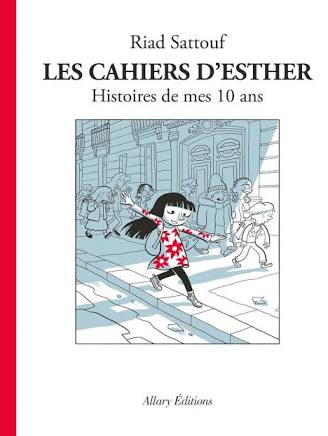
If you want to understand how French children and teenagers actually speak, Les Cahiers d’Esther is a fascinating place to start.
In this comic-book series, Riad Sattouf follows Esther from childhood through adolescence (ages 10 to 18), recounting stories inspired by conversations with a real young girl. As Esther grows up, her vocabulary evolves too, and that is precisely what makes the series so interesting for French learners.
You’ll come across slang, abbreviations, expressions used at school, vocabulary influenced by social media and pop culture, and the little verbal habits that rarely make their way into French textbooks.
It is also an excellent reminder that slang is generational. The expressions used by Esther and her friends are not necessarily the ones their parents, or even people ten years older than them would naturally use.
What to pay attention to: expressions between friends, intensifiers, insults, abbreviations and the way teenagers describe people they like or dislike.
The good news is that you can catch animated cartoon versions of the bande dessinée on this channel on Youtube : Les Cahiers d’Esther – CANAL+ – YouTube
2. The comic book La vie secrète des jeunes by Riad Sattouf
Level B1+ onwards
Level A2+ / B1 onwards:
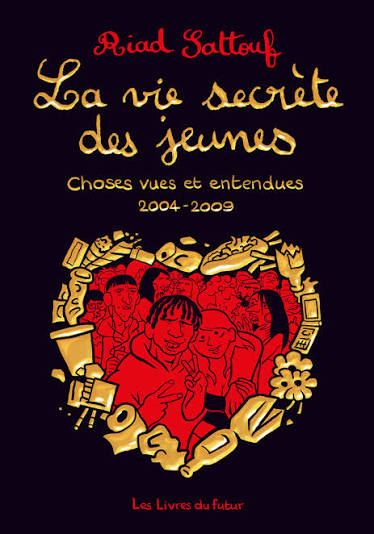
Another brilliant work by Riad Sattouf, but with a rather different approach.
La Vie secrète des jeunes is based on snippets of real conversations Sattouf overheard in public spaces : in the street, on public transport, in cafés and around housing estates and subsequently turned into short comic strips.
The original chronicles were published between 2004 and 2014, so think of this one partly as a time capsule of the way young French people spoke in the 2000s and early 2010s.
What makes it fascinating for a French learner is how raw the language feels. Sentences are not carefully constructed for learners. People interrupt themselves, shorten words, use slang and speak in ways that would probably make your old French textbook slightly nervous.
It is particularly interesting if you want to explore register, pronunciation represented in writing, verlan and the relationship between language, age and social background.
Just remember: slang evolves incredibly quickly. Not every expression you encounter here will sound equally current today, but that makes the books even more interesting from a linguistic and cultural perspective.
3. Plan Coeur (The Hook Up Plan), a series on Netflix
Level B1 onwards (with subtitles in English)
Level B2 onwards (with subtitles in French)

If your goal is to understand casual conversations between friends, put Plan Cœur on your watchlist.
The series follows a group of thirty-something friends in Paris navigating dating, friendships, work and the general chaos of adult life. Because so much of the story revolves around close friendships and romantic relationships, the characters regularly speak in a relaxed, informal register.
That means plenty of everyday expressions, slang, contractions, swear words, relationship vocabulary and the kind of spontaneous reactions French speakers use constantly but that learners aren’t always taught.
4. Dix pourcent (Call My Agent), a series on Netflix
Level B1 onwards (with subtitles in English)
Level B2 onwards (with subtitles in French)
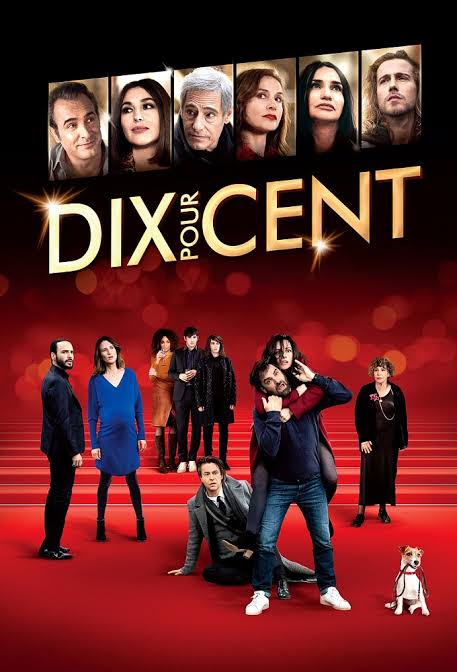
Dix pour cent is one of my favourite recommendations for learners who already understand relatively standard French and want to bridge the gap towards fast, natural spoken French.
The series takes place in a Parisian talent agency, following agents as they deal with actors, colleagues, clients and an impressive amount of professional drama.
What makes it particularly useful is the variety of registers.
One minute, you’ll hear relatively professional French during a meeting; the next, two colleagues are gossiping, arguing or complaining to each other in much more informal language.
This gives you the opportunity to notice something incredibly important: French speakers don’t simply speak “formal French” or “slang”. They constantly move along a spectrum depending on the person and the situation.
You’ll hear colloquial vocabulary, idiomatic expressions, swear words and plenty of natural spoken constructions, but also useful workplace French.
What to pay attention to: how characters switch registers, workplace vocabulary versus conversations between colleagues, expressions of frustration and the little words speakers use to soften or intensify what they’re saying.
5. Lupin, a series on Netflix
Level B1 onwards (with subtitles in English)
Level B2 onwards (with subtitles in French)
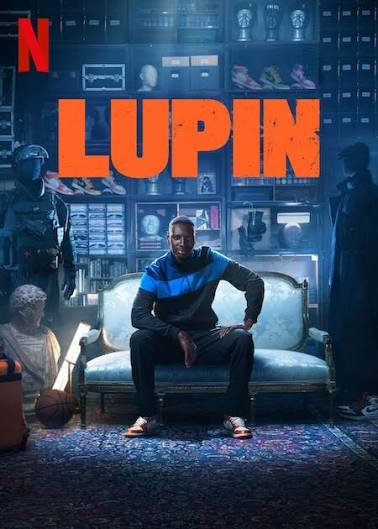
Lupin is a great option if you want something gripping enough that you almost forget you’re practising French.
Starring Omar Sy as Assane Diop, the series moves through very different social environments and relationships. This means you don’t hear just one variety of French: Assane adapts the way he speaks depending on the person in front of him and the role he is playing.
For learners, this makes Lupin particularly interesting for observing register and code-switching alongside colloquial vocabulary.
There are plenty of informal expressions and slang to pick up, and the series has even inspired French-learning resources devoted specifically to unpacking its slang.
It is also excellent listening practice because the dialogue can be fast. If you’re used to the beautifully articulated sentences from your listening exercises, Lupin might initially feel like somebody has pressed the 1.5x button on French.
That’s a good thing.
What to pay attention to: changes in register, contractions, slang, pronunciation and how Assane changes his speech according to his surroundings.
6. Les vidéos de Cyprien sur Youtube

Finally, don’t underestimate YouTube.
Cyprien has been one of the best-known French YouTubers for years, and his videos are a useful way of getting accustomed to casual, conversational French outside the format of a traditional TV series.
His comedy videos, sketches and observations about everyday life expose you to colloquial vocabulary, cultural references, idiomatic expressions and the rhythm of contemporary spoken French.
YouTube is particularly useful because you’re also exposed to the way humour works in French: exaggeration, irony, wordplay, references and expressions whose meaning often goes far beyond their dictionary definition.
And unlike a textbook recording, nobody is deliberately slowing down because you happen to be learning French.
What to pay attention to: pronunciation, sentence reductions, filler words, jokes, cultural references and expressions that keep appearing across different videos.
A little tip before you start…
Don’t try to write down every single slang word you hear. You’ll drive yourself mad, and half of your notebook will probably contain expressions you’ll never actually use.
Instead, pay attention to repetition. If you hear an expression once, notice it. If you hear it again, write it down. If you suddenly start hearing it everywhere, that’s probably a good sign that it’s worth learning.
And whenever you learn slang, don’t just write:
grave = really
Write down the whole sentence, who said it, and the situation in which they used it. Because with slang, knowing the definition isn’t enough. You also need to know when you can use it, and when you absolutely shouldn’t.
Want to understand the French people actually speak?
This is exactly the kind of French we explore in my classes at Say Oui To Français.
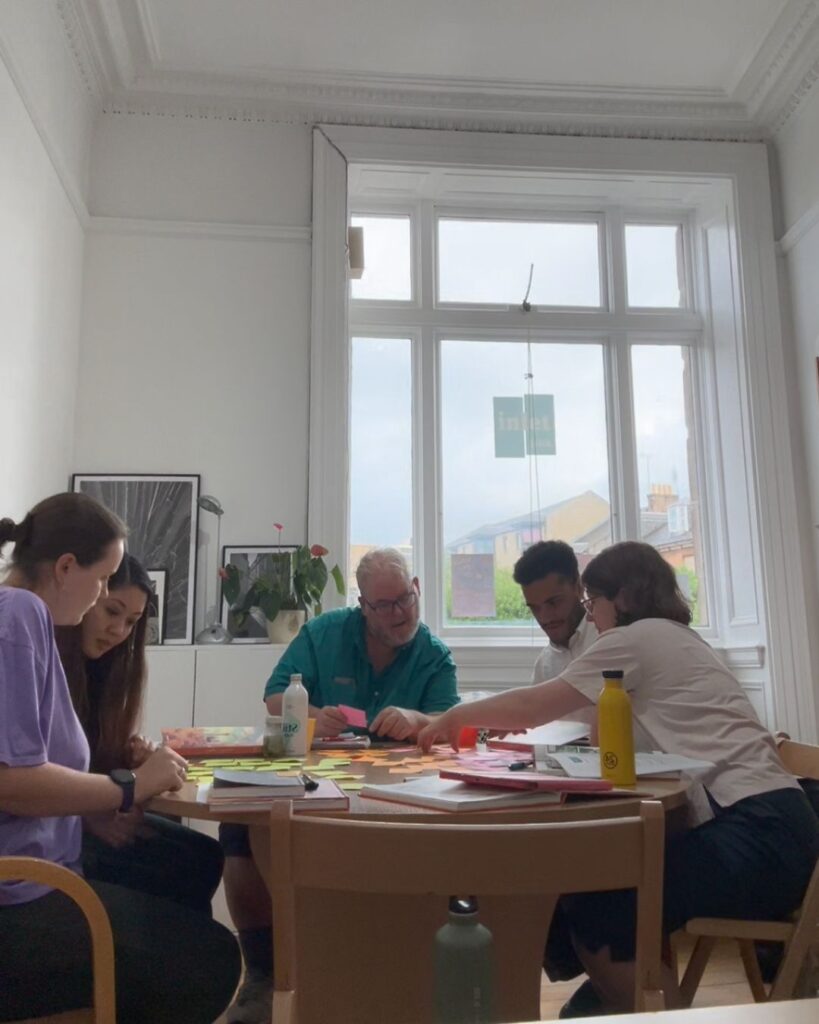
Rather than learning French only through textbooks, we work with authentic materials, real conversations, role plays, videos, comic books and everyday situations to help you understand how French is actually spoken including informal expressions, slang and all those little phrases you rarely find in a textbook.
If you’d like to put your French into practice in a friendly, conversation-focused environment, you can explore my French group classes in Edinburgh
And if learning French through stories, illustrations and authentic dialogue sounds more like your thing, have a look at my Learn French with Comic Books workshops:
Because the more real French you’re exposed to, the less you’ll find yourself thinking “Wait… what did they just say?”, and the more you’ll simply understand.

Bonjour ! My name is Jahnavi, I’m a French teacher based in Edinburgh, UK. I work with adult learners in Leith and across Edinburgh city, as well as online. I offer personalised French lessons as well as small in-person group classes adapted to your energy, goals and learning styles
Featured Blog



Other Blogs